
EU's Zero-Emission Mobility Plan: Saving Europe's Car Industry
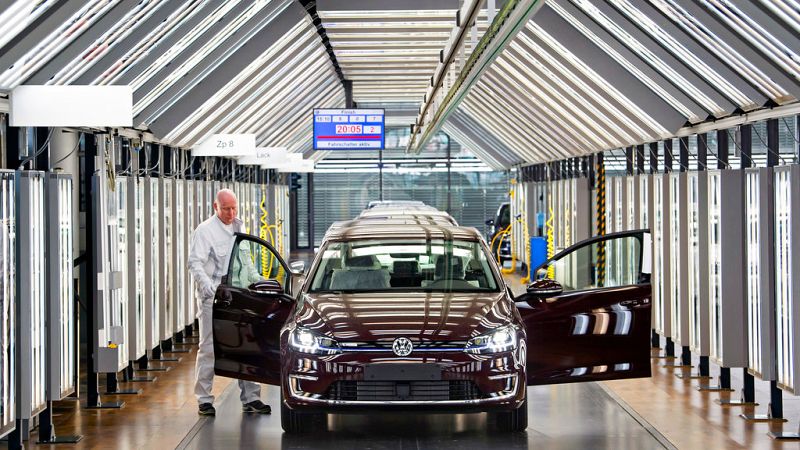
The European Commission has unveiled an action plan aimed at assisting the European automotive sector in gaining better access to crucial strategic technologies such as batteries, software, and self-driving capabilities, alongside reducing bureaucratic regulations.
On Wednesday, Apostolos Tzitzikostas, who serves as the Commissioner for Sustainable Transport and Tourism, unveiled the plan.
The document outlines five key programs aimed at bolstering the struggling automotive sector, an industry that contributes approximately 7% to the EU’s gross domestic product and supports about 14 million jobs throughout the region.
Nevertheless, the industry has faced challenges because of vulnerabilities in the supply chain, elevated energy expenses, and an excessive dependency on crucial materials.
To tackle this issue, the Commission has declared a fund of €1.8 billion aimed at establishing a safe and competitive supply chain for battery raw materials.
Ensuring a secure source of batteries and their raw materials is among the primary challenges the automotive sector faces during the shift towards emission-free vehicles.
"We aim to boost local manufacturing to reduce strategic vulnerabilities, particularly concerning battery production," stated Commission President Ursula von der Leyen on Wednesday.
Moreover, the European Commission highlighted the importance of European automakers becoming frontrunners in producing AI-driven, interconnected, and autonomous vehicles. In order to facilitate this, they committed to providing €1 billion in funding from 2025 through 2027.
An additional €570 million will be allocated for the development of charging stations.
The action plan details additional measures for enhancing the skills of workers within the sector and pledges ongoing assistance to small and medium-sized enterprises (SMEs).
More adaptable yet fundamentally unaltered clean mobility objectives
The Commission remains committed to its clean mobility goals, establishing fixed limits on the amount of emissions that newly manufactured cars and vans will be allowed to emit in 2025, 2030, and 2035.
At present, the aim is to gradually reduce the emissions of newly manufactured vehicles until 2035, after which only zero-emission models will be permitted for production.
"We will adhere to our committed emission goals while adopting a practical and adaptable strategy," stated Von der Leyen.
Following numerous appeals from the automotive sector, and with electric vehicle sales decelerating in Europe, the Commission pledged to introduce a revised proposal.
If implemented, this change would allow vehicle makers three years rather than just one to achieve their compliance goals (emission standards) by calculating the average across 2025 through 2027. This means that if they fall short in any single year within this period, they could compensate during another year within the same timeframe.
Even though they are currently adhering to the targets, the Commission intends to examine the regulations concerning CO2 emission standards during the latter part of 2025, earlier than initially anticipated.
In the meantime, the Commission committed to assisting in increasing the demand for European zero-emission vehicles and released a fresh proposal aimed at decarbonizing commercial fleets. Such fleets account for 60% of new vehicle registrations.
Enhancing European automakers' position on the international market
The United States is pressuring Europe with a potential 25% trade tariff, posing a significant risk to the region’s automobile sector. Meanwhile, Chinese competitors have been putting pressure on European car manufacturers’ profitability in the international market as well.
To assist European automakers in turning the tide, the Commission committed to "maintain fair competition" through various tools. This includes implementing anti-subsidy actions along with forging free trade deals.
The Commissioner designated India as one of the "like-minded" nations where the EU might establish advantageous trade deals.
Diverse responses from the sector regarding the Action Plan have been observed.
The European Automobile Manufacturers' Association (ACEA) stated that although they supported the action plan, "certain crucial components were absent."
"A range of ambitious initiatives to enhance infrastructure, provide demand incentives, and lower manufacturing costs are essential for automobiles, vans, trucks, and buses," according to the ACEA statement.
Sigrid de Vries, who serves as the Director General of ACEA, further commented: "This suggested flexibility to achieve CO2 objectives over the next few years marks a positive initial move toward a more practical strategy for reducing carbon emissions, one that takes into account both market conditions and geopolitical factors. This could provide some relief for manufacturers of cars and vans, assuming that the essential increase in demand along with the necessary expansion of charging facilities will indeed be implemented."
E-Mobility Europe stated: "We lament the weakening of Europe's CO2 targets for 2025, which could stifle near-term electric vehicle sales, diminish investment certainty, and disadvantage top-performing companies."
Lucie Mattera, the Secretary General of ChargeUp Europe, voiced her concerns as well, stating: “The European Commission has reaffirmed the target for 2035 with zero emissions. Although the new flexibilities announced add some ambiguity during this period, more than 11 million electric vehicles are already circulating on European streets, indicating that the shift towards electrification is firmly progressing."
Addressing the frequent complaint about insufficient charging stations, which hampers demand, she stated: "The electric vehicle charging infrastructure industry expands daily, offering faster speeds and enhanced, hassle-free EV charging experiences."
The main problem with the updated charging infrastructure is obtaining entry to the grid , which provides electricity.
It might require several months, or even years in certain instances.
To tackle this issue, the commissioner stated that Brussels plans to release recommendations for member states aimed at reducing wait times.
The Commission is considering whether it should make it obligatory for member states to prioritize these requirements, ensuring that permit approvals can be expedited.
Gabung dalam percakapan