
Could Another European Nation Join the Nuclear Club?
Poland needs to strive for cutting-edge weaponry, such as nuclear and contemporary non-traditional arms," stated Polish Prime Minister Donald Tusk during a recent address to Parliament. "This is a significant competition—a contest for safety rather than conflict.
As the Trump administration indicated it was largely stepping away from safeguarding Europe, Tusk’s remarks appeared to imply a possible shift towards increased nuclear armament in Europe, which would be contrary to years of European policy.
Despite uncertainties surrounding the United States’ continued dedication to ensuring Europe’s nuclear security, China is increasing its nuclear capabilities. Meanwhile, Russia—which possesses the largest cache of nuclear weapons—frequently threatens their use to caution NATO and the European Union against direct military involvement in Ukraine.
This broad view brings up two challenging queries. How might Europe sustain a pan-continental nuclear deterrence strategy? And could there be an opportunity for additional nations to become part of the nuclear powers' circle?
Even though several countries in Europe possess certain components needed for building their own nuclear weapons, specialists believe the likelihood of additional European nations acquiring such capabilities remains low.
Starting from scratch
As stated by Fabian Rene Hoffmann, a research fellow with the Oslo Nuclear Project, should any European NATO member state express interest in developing its own nuclear arsenal instead of merely hosting them, it would essentially be starting from scratch.
"The primary challenge for European nations is that they either lack the civilian nuclear facilities needed to initiate a nuclear weapons program, or if such infrastructure exists, it is designed with significant 'anti-proliferation' measures," he explained to Euronews.
For instance, both Finland and Sweden operate solely with light-water reactors, making them unsuitable for generating weapons-grade plutonium. Furthermore, these nations do not possess chemical reprocessing facilities required to isolate desired isotopes from undesired ones during fissile material production.
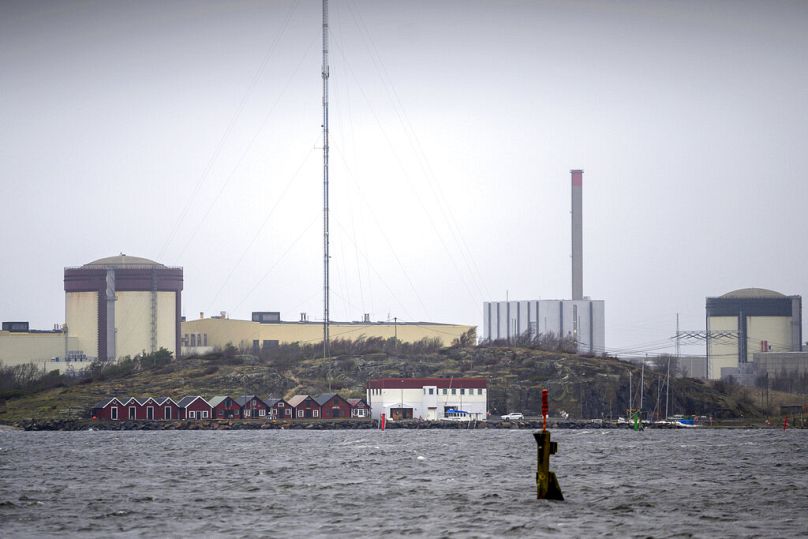
Even if they wished to initiate a nuclear program, they wouldn't be able to do so using their current facilities, particularly not in the near future. This applies to every European country without nuclear weapons that currently has a civil nuclear program.
Hoffman recognized one possible exemption: Germany.
Although it doesn’t install major civilian nuclear facilities these days, it possesses a substantial amount of highly enriched uranium for research reasons,” he stated. “In theory, this supply might be redirected with sufficient work into producing weapon-grade fissionable material.
However, even under those conditions, it would suffice for approximately 5 to 15 nuclear warheads, which means it wouldn’t be adequate for maintaining what we refer to as a 'strong' nuclear deterrence.
Opening the umbrella
Both of Europe's nuclear-armed nations, the United Kingdom and France, face significant choices regarding their future with regards to nuclear weapons.
Currently, the United Kingdom's submarine-based nuclear deterrence system is encountering an unclear path forward. Its aging fleet of submarines will soon require replacement, and even more critically, these vessels rely on missiles produced and stored at a U.S. facility. This situation makes Britain's security particularly dependent on cooperation from another nation.
In contrast, France's deterrent force is bigger and less dependent on NATO, extending beyond just submarine-based capabilities. This implies it might possibly be "forward deployed" in other parts of Europe—but as Hoffman pointed out, this concept isn’t as straightforward as it seems.
“He informed Euronews that infrastructure would need to be developed in the host nations, particularly shelters.” He added, “Deploying French nuclear arms in Germany wouldn’t significantly change anything. Instead, these weapons ought to be positioned closer to the front lines—countries facing Russia such as Poland,” he stated.
His remarks follow Poland expressing interest in having US nuclear weapons stationed on its territory.
Out of the shadows
Following the conclusion of the Cold War and the dissolution of the Warsaw Pact, Poland no longer hosted the Soviet nuclear arms that were previously based within its borders. Similar to many European nations, it has subsequently endorsed several global accords aimed at curbing the proliferation of nuclear weaponry, such as the Treaty on the Non-Proliferation of Nuclear Weapons and the Comprehensive Nuclear-Test-Ban Treaty.
If Poland or another European country were to begin developing their own nuclear weapons, they would be discarding a principle that has been upheld in the Western world for thirty years.
The highly developed global nuclear non-proliferation regime has long been focused on curtailing the North Korean weapons programme, heading off weapons-grade enrichment in Iran, and preventing uncontrolled international flows of uranium, plutonium, and the components needed to enrich enough of either to create a viable nuclear device.
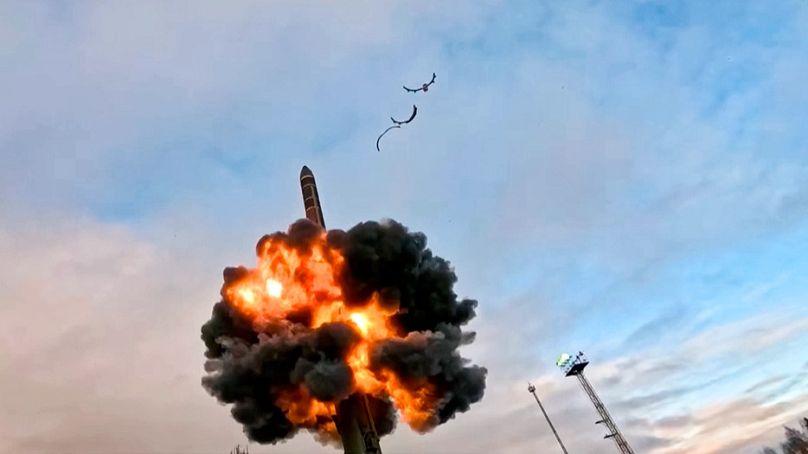
The possibility of a European state independently developing weapons was never part of the negotiations — however, this doesn’t imply that an ambitious proliferator could achieve this without being noticed.
Hoffman stated that none of the European non-nuclear-weapon states would probably manage to secretively proliferate. "Similar to everywhere else globally, nuclear facilities and related materials in Europe are closely monitored by the International Atomic Energy Agency’s stringent oversight mechanisms," he explained. This means that any unauthorized movements would very likely be detected.
In spite of this, international organizations and watchdogs responsible for preventing the spread of weapons face the challenge of adapting to emerging technologies that could facilitate illegal proliferation.
opting for an affordable nuclear option
Of special concern is additive manufacturing, also known as 3D printing. According to the U.S.-based Center for Strategic and International Studies, this technology might facilitate "the creation of unstable routes toward acquiring nuclear capabilities and weaponry." This means individuals seeking such technologies could possibly circumvent typical oversight by producing difficult-to-obtain parts domestically using 3D printers.
Up until now, global efforts aimed at preventing the spread of nuclear weapons have primarily concentrated on making it extremely difficult for nations acting unilaterally ("rogue states") to acquire such weaponry. However, with advancements like three-dimensional printing, artificial intelligence, and other swiftly evolving technologies, the strategies employed to hinder clandestine proliferation might need to be adapted accordingly.
A significant historical instance stands out from this period. During the middle of the 20th century, apartheid-era South Africa commenced testing nuclear weapons and eventually developed six warheads capable of being mounted onto intercontinental ballistic missiles in theory.
Importantly, the nation enhanced its own weapons-grade uranium using a technique known as the Helikon vortex separation process. This method, though energy-consuming, is relatively inexpensive and has raised concerns among certain specialists who fear it might still be employed to refine a modest amount of fissionable uranium nowadays.
So far, South Africa stands as the sole nation in history to have developed its own nuclear arms and subsequently relinquished them, discontinuing its deterrence and ballistic missile programs as apartheid crumbled and the Cold War drew to a close.
However, the tale of its affordable expansion initiative underscores that despite rigorous global oversight of essential dual-use parts and radiological substances, a nation resolute enough to develop a nuclear deterrence could potentially achieve this domestically.
It remains to be seen whether any current European countries would consider taking such an extreme measure, which could place them alongside nations like North Korea. However, the actions of both the United States and Russia in the coming period might ultimately decide this issue.
Gabung dalam percakapan